
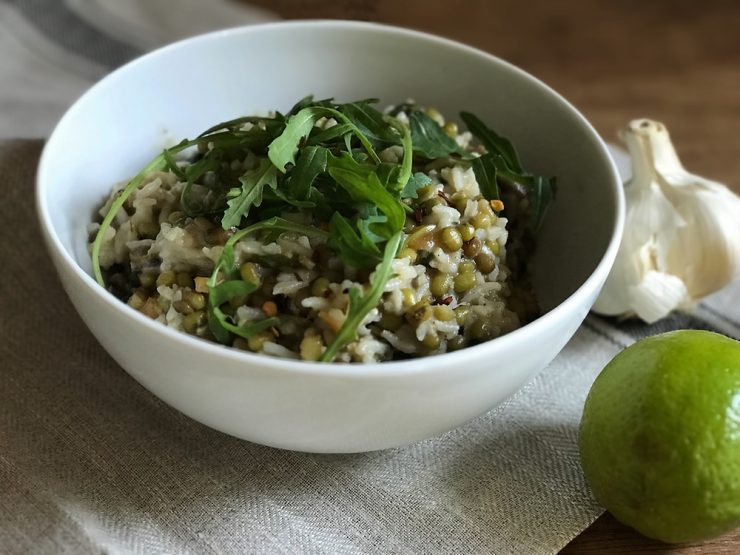
 Jayashee
Video credit: Bav via YouTube.
Some dinners need a long ingredient list and three different pans.
This one doesn’t.
Coconut and lime mung beans and rice brings together creamy coconut milk, tender mung beans, fluffy basmati rice, sweet potato, mushrooms, jalapeños, garlic, greens, warm spices, and fresh lime in one seriously satisfying meal.
It’s hearty without feeling heavy, bright without being overly spicy, and packed with the kind of comforting flavors that make you want to go back for another spoonful.
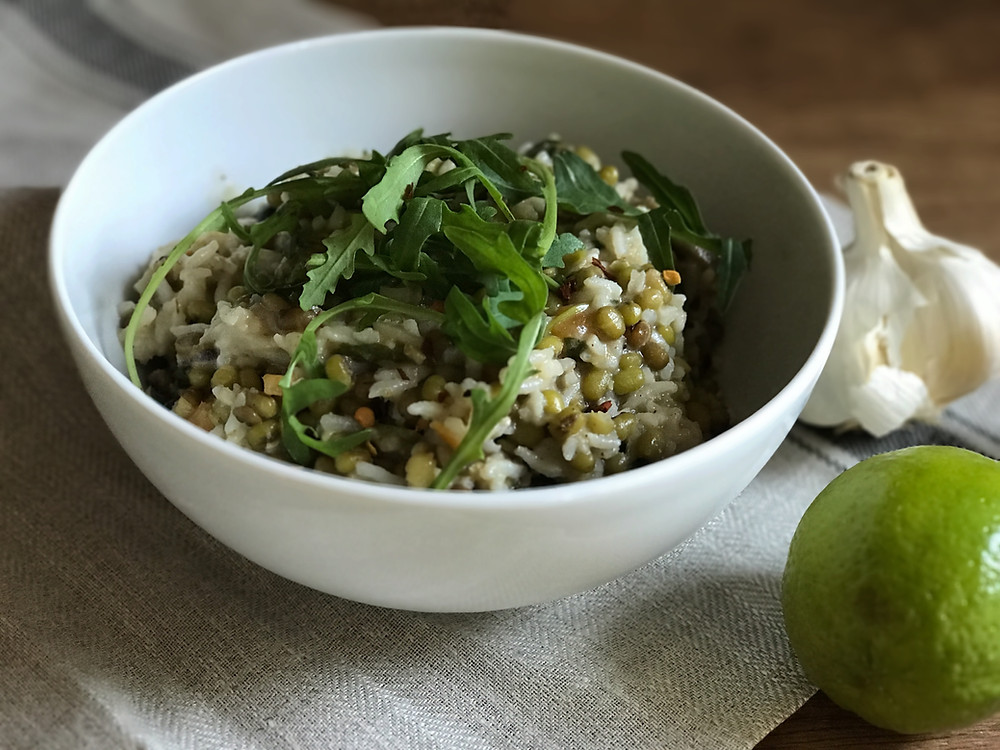
Why You’ll Love This Coconut and Lime Mung Beans and Rice Recipe
There is something wonderfully practical about a bowl that gives you beans, rice, vegetables, coconut, herbs, and plenty of flavor at the same time.
The original recipe uses simple plant-based ingredients and cooks the mung bean mixture in coconut milk while the basmati rice is prepared separately. Once the beans are tender, the lime juice, greens, and cooked rice are stirred in before serving with cilantro.
That combination creates a meal with several textures going on at once.
- Creamy: Lite coconut milk gives the mung beans a smooth, comforting base.
- Hearty: Mung beans and basmati rice make the dish substantial.
- Sweet: Small cubes of sweet potato add natural sweetness.
- Spicy: Jalapeños provide a little heat.
- Earthy: Mushrooms and mung beans add depth.
- Bright: Fresh lime juice wakes everything up at the end.
- Fresh: Cilantro and greens give the finished bowl a lively finish.
In other words, this isn’t sad desk-lunch rice.
This is rice that has plans.
What Are Mung Beans?
Mung beans are small green legumes widely used in Indian and Southeast Asian cooking. They have a mild, slightly earthy flavor, which makes them incredibly versatile.
Whole mung beans hold their shape reasonably well during cooking, while split mung beans cook differently and tend to become softer and more uniform.
That distinction matters here because the original recipe calls for whole mung beans.
Mung beans are also naturally rich in protein and fiber. They can be used in curries, soups, salads, rice dishes, and even desserts.
If you’re new to cooking with them, this recipe is a particularly friendly place to start because the coconut milk, vegetables, spices, and lime give them plenty of flavor.
For additional information about mung beans and their nutritional profile, see this mung bean nutrition guide.
Ingredients for Coconut and Lime Mung Beans and Rice
The original recipe uses a straightforward ingredient list.
Mung Beans
You need 1 cup of mung beans, rinsed before cooking.
Use whole mung beans for the texture intended by the recipe.
Give them a good rinse and look through them quickly before cooking. Dried beans can occasionally contain tiny bits of debris, so a quick inspection is always worthwhile.
Basmati Rice
The recipe calls for 1 cup of basmati rice.
Basmati is a great match here because its fragrant, long grains provide a lovely contrast to the creamy mung bean mixture.
Rinse the rice before cooking to remove excess surface starch and help the grains cook up nicely.
Lite Coconut Milk
The original recipe uses one can of lite coconut milk, although it also gives the option of using two cups of another plant-based milk.
Coconut milk is what gives the mung beans their creamy character without using dairy.
Sweet Potato
One sweet potato is cut into small cubes.
The small pieces cook more evenly and become tender while the mung beans simmer.
Onion
Half an onion provides a savory base for the dish.
Dice it fairly small so it blends naturally into the finished meal.
Jalapeños
Two diced jalapeños bring heat and freshness.
If you prefer a milder dinner, reduce the amount or remove some of the seeds and inner membranes.
Mushrooms
The recipe uses half a package of chopped mushrooms.
Mushrooms add an earthy flavor that works especially well with coconut, cumin, coriander, and mung beans.
Garlic
Two minced garlic cloves add another layer of savory flavor.
Greens
You need about 1 packed cup of greens of your choice.
This gives you plenty of freedom. Spinach, kale, chard, or another sturdy leafy green can work depending on what you have available.
Hemp or Flax Seeds
The original recipe uses one tablespoon of hemp seeds or lightly ground flax seeds.
It’s a small addition, but it fits nicely into the creamy texture of the dish.
Spices
The recipe keeps the spice blend simple:
- 1 teaspoon cumin
- 1 teaspoon coriander
- ½ teaspoon paprika
- Salt to taste
- Black pepper to taste
This combination gives the dish warmth without drowning out the coconut and lime.
Lime and Cilantro
Fresh lime juice and cilantro are the finishing touches.
And don’t underestimate that lime.
It’s the ingredient that makes the whole bowl suddenly taste brighter.

How to Make Coconut and Lime Mung Beans and Rice
Step 1: Rinse the Mung Beans and Rice
Start by rinsing the mung beans and basmati rice separately.
Set both aside while you prepare the vegetables.
Step 2: Cook the Onion and Jalapeños
Heat a couple of tablespoons of water in a large pot over medium-high heat.
Add the diced onion and jalapeños.
Cook them for a few minutes until they begin to soften.
This water-sauté method keeps the original recipe oil-free while still giving the vegetables a chance to soften and release their flavors.
Step 3: Add the Mushrooms
Add the chopped mushrooms and cook for a few more minutes.
You’ll notice the mushrooms begin to soften and release some of their moisture.
That’s exactly what you want.
Step 4: Build the Mung Bean Mixture
Add the rinsed mung beans, coconut milk, one cup of water, hemp seeds or lightly ground flax seeds, sweet potato, garlic, cumin, coriander, salt, and paprika.
Give everything a good stir.
At this point, the pot starts smelling considerably more interesting.
Step 5: Bring It to a Boil
Increase the heat and bring the mixture to a boil.
Once it reaches a boil, reduce the heat to a simmer.
Step 6: Simmer Partially Covered
Partially cover the pot and let everything simmer for about 30 minutes.
This gives the mung beans time to become tender while the sweet potato cooks and the coconut-spice mixture develops more flavor.
Stir occasionally and keep an eye on the liquid level.
Step 7: Cook the Basmati Rice
While the mung bean mixture is simmering, prepare the basmati rice in a separate pan according to the package instructions.
Cooking the rice separately makes it easier to control the texture.
You want fluffy rice, not rice pudding.
Step 8: Check the Mung Beans
After about 30 minutes, check the mung beans.
If they are still a little firm, continue cooking for another 10 minutes.
Don’t judge the dish by the clock alone. The beans are ready when they are tender enough to eat comfortably.
Step 9: Add Lime and Greens
Once the mung beans are fully cooked, remove the pot from the heat.
Add the fresh lime juice and your packed cup of greens.
Stir gently.
The heat from the mixture will help soften the greens.
Step 10: Stir in the Rice
Add the cooked basmati rice and stir until everything is evenly combined.
Now you’ve got the complete dish: creamy mung beans, rice, vegetables, coconut, spice, and lime.
Step 11: Garnish With Cilantro
Top with fresh cilantro and serve.
For even more lime flavor, serve extra lime wedges on the side.
Why the Coconut and Lime Combination Works
Coconut and lime are a classic flavor pairing for a reason.
Coconut brings richness and softness.
Lime brings acidity and brightness.
Put them together and you get balance.
It’s similar to adding a squeeze of lemon to a rich soup. The citrus doesn’t necessarily make the soup taste lemony; instead, it makes the other flavors seem clearer.
That’s what happens here.
The lime cuts through the creamy coconut milk and makes the cumin, coriander, garlic, vegetables, and mung beans taste more vibrant.
Why Sweet Potato Is Such a Good Addition
Sweet potato might seem like an unusual ingredient in a mung bean rice dish, but it makes perfect sense once you taste it.
The sweet potato becomes tender during the simmering process and adds gentle sweetness to the savory mixture.
That sweetness also plays nicely with the spicy jalapeño and bright lime.
Cut the sweet potato into small, evenly sized cubes so the pieces cook at roughly the same speed.
If you cut them too large, you may end up with tender mung beans and sweet potato cubes that are still auditioning for a role in the next season of “Hard as a Rock.”
How Spicy Is This Mung Bean Rice Recipe?
The original recipe uses two jalapeños, so there is definitely some heat.
However, the coconut milk and sweet potato help soften the overall effect.
If you’re sensitive to spice, start with one jalapeño.
You can always add more heat later, but you can’t magically retrieve two chopped jalapeños from a pot once they’ve gone in.
How to Make It Milder
For a family-friendly version, try these adjustments:
- Use one jalapeño instead of two.
- Remove the seeds and inner membranes.
- Add more coconut milk if the finished dish tastes too spicy.
- Serve with extra basmati rice.
- Add more greens or sweet potato.
The lime can also help balance the overall flavor, although it doesn’t actually remove the heat.
Can You Make This Recipe Without Oil?
Yes. The original recipe begins by heating a couple of tablespoons of water in the pot instead of oil.
The onion and jalapeños are softened in the water, followed by the mushrooms.
This makes the dish particularly useful for anyone looking for an oil-free vegan dinner.
If you prefer to cook with oil, you can use a small amount instead, but it isn’t necessary for the basic recipe.
What Greens Work Best?
The original recipe simply says to use one packed cup of greens of your choice.
That makes this recipe wonderfully flexible.
Spinach
Spinach wilts quickly and has a mild flavor.
Kale
Kale provides a more substantial texture and can stand up to the hearty mung beans.
Swiss Chard
Chard adds color and a slightly earthy flavor.
Collard Greens
These are sturdier and may need a little more cooking time.
Whatever you choose, chop larger leaves into manageable pieces so they’re easy to eat with the rice and beans.
Whole Mung Beans vs. Split Mung Beans
This distinction is worth mentioning because the names can be confusing.
Whole mung beans have their green outer skin intact and hold their shape better during cooking.
Split mung beans, often sold as moong dal, cook more quickly and tend to become softer.
For this particular recipe, use whole mung beans because that’s what the original recipe specifies.
If you substitute split mung beans, expect the final texture to be softer and more stew-like.
Can You Use Brown Rice Instead of Basmati?
You can experiment with brown rice, but you’ll need to account for the different cooking time and liquid requirements.
The original recipe specifically uses basmati rice, prepared separately according to package instructions.
If you want the closest result to the original, stick with basmati.
If you’re experimenting, cook the brown rice separately and combine it with the mung bean mixture at the end.
What Does Coconut Lime Mung Beans and Rice Taste Like?
Think creamy, savory, earthy, slightly spicy, gently sweet, and bright.
The mung beans provide an earthy base.
The coconut milk softens everything and gives the dish a creamy texture.
Sweet potato contributes sweetness.
Mushrooms add depth.
Jalapeños provide heat.
Cumin and coriander bring warmth.
Then lime arrives at the end like someone opening the curtains and letting sunlight into the room.
Finally, cilantro adds a fresh herbal finish.
It’s a lot of flavor for a recipe that uses such everyday ingredients.
Tips for Cooking Perfect Mung Beans
Mung beans are relatively straightforward, but a few simple habits make the cooking process easier.
- Rinse them well: Remove dust and any unwanted debris.
- Check the texture: Don’t rely only on cooking time.
- Keep the pot partially covered: This helps maintain a gentle simmer while allowing some steam to escape.
- Stir occasionally: It helps prevent sticking and keeps the mixture evenly cooked.
- Adjust liquid carefully: Add small amounts if the pot becomes too thick before the beans are tender.
- Add lime at the end: The original recipe adds the lime juice after cooking.
How to Get Fluffy Basmati Rice
Rice is one of those ingredients where small details can make a noticeable difference.
Start by rinsing the basmati rice.
Then cook it according to the package directions.
Once cooked, let it rest briefly before fluffing it with a fork.
Try not to stir the rice aggressively while it’s cooking. You want distinct grains rather than one giant rice colony.
Can You Make Coconut Mung Beans and Rice Ahead?
Absolutely.
This recipe is a good candidate for meal preparation because the mung bean mixture and rice can both be stored and reheated.
For the best texture, store the rice separately from the mung bean mixture if you know you’ll be eating leftovers over several days.
That gives you more control when reheating.
It also makes it easier to adjust the ratio of rice to beans from one meal to the next.
Need more vegan meal-prep inspiration? Try Vegan Baked Beans With Coconut Bacon for another hearty plant-based option.
How to Store Leftovers
Allow the food to cool appropriately before transferring it to airtight containers.
Keep leftovers refrigerated and reheat thoroughly before eating.
If the mung bean mixture thickens in the refrigerator, stir in a small splash of water or plant-based milk while reheating.
Rice can also become firmer when chilled, so a little moisture can help bring everything back together.
How to Reheat Coconut and Lime Mung Beans and Rice
Stovetop Method
Place the mung bean mixture in a saucepan over medium-low heat.
Add a small splash of water or plant-based milk.
Stir occasionally until heated through.
Warm the rice separately, then combine.
Microwave Method
Place a portion in a microwave-safe bowl.
Add a small splash of water and cover loosely.
Heat in short intervals, stirring between them, until hot.
If you’re reheating rice, make sure it has been stored safely and is thoroughly reheated before serving.
Easy Variations to Try
Add More Vegetables
Bell peppers, zucchini, peas, carrots, or cauliflower can all work in a variation.
Make It Extra Limey
Serve with additional lime wedges and squeeze fresh juice over each bowl just before eating.
Add Fresh Ginger
A little grated fresh ginger can give the dish a brighter, more aromatic flavor.
Make It Extra Creamy
Use coconut milk rather than a thinner plant-based milk and add a small spoonful of coconut milk over the finished bowl.
Add More Herbs
Cilantro is the original garnish, but green onions or fresh mint can also be fun additions.
What to Serve With Mung Beans and Rice
This is already a complete meal, but you can add a few simple sides if you’re feeding a crowd.
- Fresh cucumber salad
- Roasted vegetables
- Simple green salad
- Avocado
- Extra lime wedges
- Warm flatbread
- Fresh cilantro
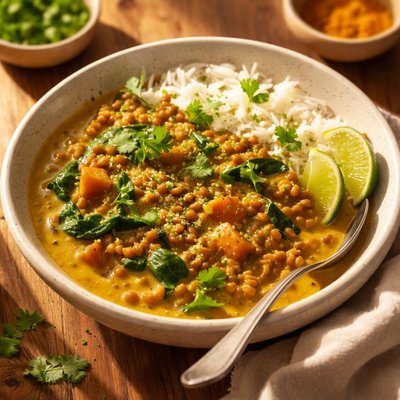
If you want to continue the coconut-and-mango theme, try Crispy Coconut Tofu With Mango Curry for another tropical vegan dinner.
Can You Serve This as a One-Pot Meal?
The original recipe uses separate cooking for the mung bean mixture and basmati rice.
You can experiment with combining them, but the cooking times and liquid requirements can change significantly.
Cooking the rice separately gives you better control over its texture and lets the mung beans simmer until tender without turning the rice mushy.
So while the dish is wonderfully simple, keeping the rice separate during cooking is worth the extra pan.
Is Coconut and Lime Mung Beans and Rice Vegan?
Yes. The original recipe is built entirely around plant-based ingredients, including coconut milk or another plant-based milk, mung beans, basmati rice, vegetables, seeds, spices, lime, and cilantro.
It is also naturally free of eggs and dairy.
If you’re following a strict dietary plan, check packaged ingredients such as plant-based milk and spice blends to make sure they meet your requirements.
Is This Recipe Gluten-Free?
The individual ingredients in the original recipe are generally naturally gluten-free, but packaged products can vary.
If you need to avoid gluten strictly, check labels on packaged coconut milk, plant-based milk, spices, and any other processed ingredients you use.
What Makes Lime So Important?
It’s tempting to think of lime juice as a garnish.
Here, it’s more important than that.
The original recipe adds the juice of one lime after the mung beans are cooked.
That timing matters because the fresh juice provides a bright finishing note rather than becoming lost during a long cooking process.
Try the dish before adding the lime and then taste it again afterward.
You’ll notice the difference immediately.
How to Balance the Flavor
A good bowl of coconut mung beans and rice should have contrast.
If it’s too rich, add lime.
If it’s too spicy, add more rice or coconut milk.
If it’s too mild, add more jalapeño or black pepper.
If it’s too earthy, fresh cilantro and lime can brighten it.
If it’s too thick, add a splash of water or plant-based milk.
Cooking is often less about following a rigid rule and more about tasting and adjusting.
Frequently Asked Questions
Do I need to soak mung beans before cooking?
The original recipe does not require soaking. The rinsed mung beans are added directly to the pot and simmered until tender.
Can I use canned mung beans?
You can experiment, but canned mung beans are already cooked and would require a different cooking approach. The original recipe is written for dried mung beans.
Can I use regular white rice?
Yes, but basmati is the rice specified in the original recipe and provides a fragrant, long-grain texture.
Can I use coconut cream?
Coconut cream is much richer than lite coconut milk, so it would create a heavier dish. If you use it, consider diluting it with water.
Can I leave out the jalapeños?
Absolutely. The dish will be milder while still getting plenty of flavor from garlic, cumin, coriander, paprika, coconut, and lime.
Can I use frozen greens?
Yes. Thaw and drain them well first so they don’t add too much extra water to the finished dish.
Can I replace sweet potato?
You can try pumpkin, butternut squash, or another naturally sweet vegetable with a similar cooking time.
Can I use lemon instead of lime?
Yes. Lemon will provide acidity, although the flavor will be slightly different from the original lime-based recipe.
Can I make this dish less spicy?
Yes. Use fewer jalapeños or remove the seeds and inner membranes before chopping.
Can I freeze the leftovers?
The mung bean mixture can generally be frozen in an airtight container. Rice can also be frozen safely when handled and stored properly. Thaw refrigerated portions and reheat thoroughly before serving.
Nutrition and Mung Beans
Mung beans are an especially interesting ingredient if you’re looking for more plant-based foods.
They provide protein, fiber, vitamins, and minerals. Nutrition information can vary depending on whether the beans are raw, cooked, sprouted, and how much is consumed.
Rather than treating one ingredient as a miracle food, it’s better to look at the whole meal. Here, mung beans are paired with rice, vegetables, greens, seeds, coconut milk, herbs, and lime.
For detailed nutritional information about mung beans, see the Healthline mung bean nutrition guide.
More Vegan Recipes to Try
If you enjoy this coconut and lime mung bean recipe, you have plenty of directions to explore next.
For breakfast, try Easy Baked Peanut Butter Pancakes.
For something sweet and fruity, Easy Baked Peaches With Oat Crisp is a fun option.
For a tropical breakfast, Coconut Mango Oatmeal uses another delicious combination of coconut and fruit.
If you’re interested in homemade plant-based milk, check out Fast, Easy, Cheap Oat and Hemp Milk.
For a festive drink, try Coconut Gingerbread Eggnog.
And for another cozy spread, Easy Bourbon Pumpkin Butter is worth saving for later.
Coconut and Lime Mung Beans and Rice Recipe
Ingredients
- 1 cup mung beans, rinsed
- 1 cup basmati rice, rinsed
- 1 can lite coconut milk or 2 cups plant-based milk
- 1 cup water
- 1 sweet potato, cut into small cubes
- ½ onion, diced
- 2 jalapeños, diced
- ½ package mushrooms, chopped
- 2 cloves garlic, minced
- 1 cup packed greens of your choice
- 1 tablespoon hemp seeds or lightly ground flax seeds
- 1 teaspoon cumin
- 1 teaspoon coriander
- 1 teaspoon salt, or to taste
- ½ teaspoon paprika
- Black pepper to taste
- Juice of 1 lime
- Fresh cilantro for topping
Instructions
- Rinse the mung beans and basmati rice separately.
- Heat a couple of tablespoons of water in a large pot over medium-high heat.
- Add the onion and jalapeños and cook for a few minutes until they begin to soften.
- Add the chopped mushrooms and cook for a few minutes more.
- Add the mung beans, coconut milk, one cup of water, hemp seeds or lightly ground flax seeds, sweet potato, garlic, cumin, coriander, salt, paprika, and black pepper.
- Bring the mixture to a boil over high heat.
- Reduce the heat to a simmer and partially cover the pot.
- Cook for about 30 minutes, stirring occasionally.
- Meanwhile, prepare the basmati rice separately according to the package instructions.
- Check the mung beans. If they are still firm, continue cooking for another 10 minutes or until tender.
- Remove the mung bean mixture from the heat.
- Add the fresh lime juice and greens.
- Stir in the cooked basmati rice.
- Top with fresh cilantro and serve.
Final Thoughts
Coconut and lime mung beans and rice is the kind of recipe that quietly earns a permanent place in your dinner rotation.
It doesn’t rely on complicated techniques.
It doesn’t require a dozen unusual ingredients.
And it doesn’t need meat or dairy to feel satisfying.
You get creamy coconut milk, earthy mung beans, fragrant basmati rice, sweet potato, mushrooms, greens, jalapeño, garlic, and warm spices.
Then lime comes in at the very end and ties the whole thing together.
It’s cozy enough for a rainy evening, colorful enough for a dinner party, and practical enough for weekday meal prep.
Most importantly, it’s flexible.
Change the greens.
Adjust the jalapeño.
Add more lime.
Try a different plant-based milk.
Make the bowl your own.
Because that’s what good everyday cooking should do: give you a solid starting point and then get out of the way.
Grab your mung beans, rinse that basmati rice, chop a sweet potato, and get the coconut milk ready.
Dinner is about to get a whole lot more interesting.




Add comment